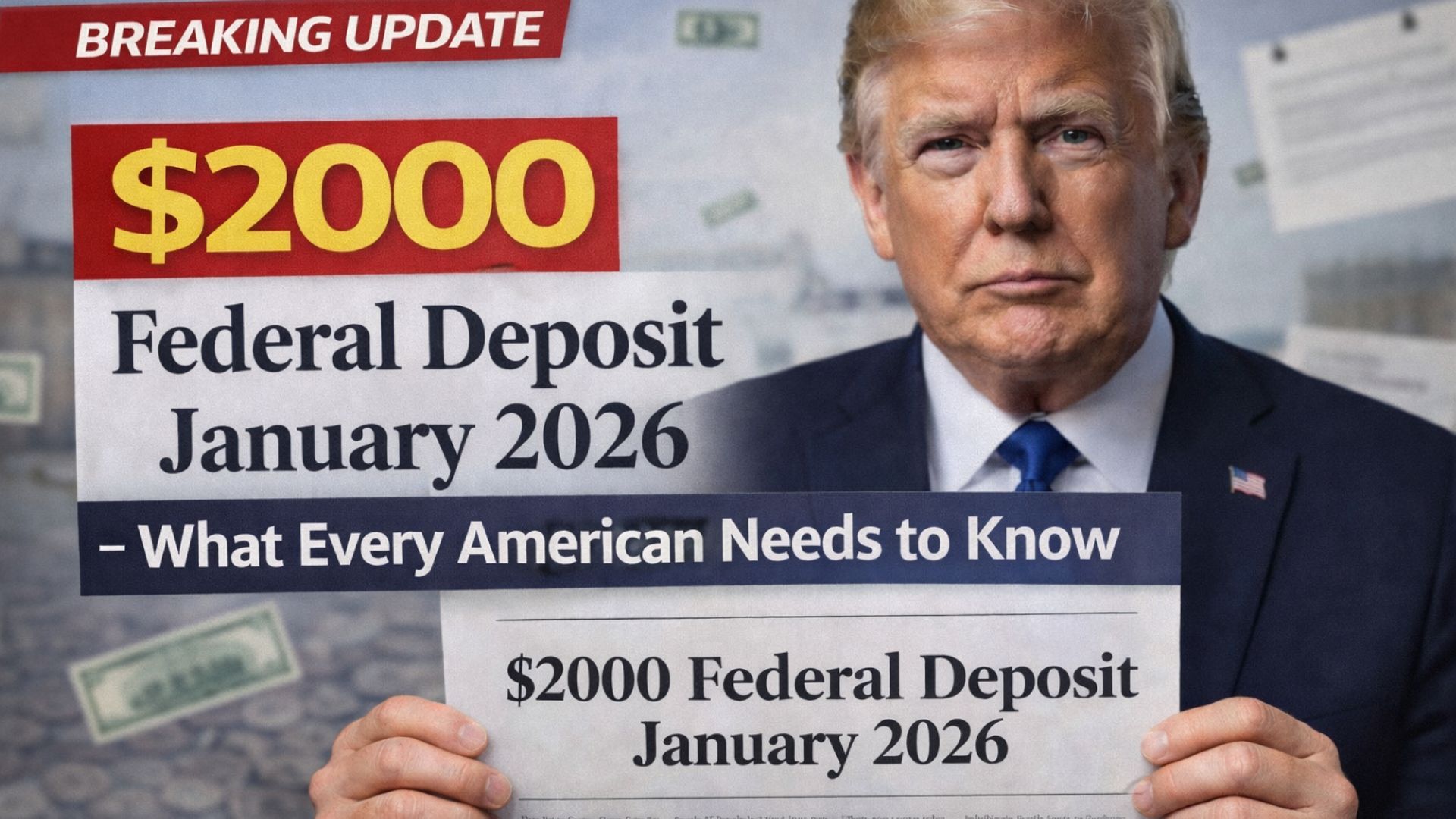
As January 2026 approaches, talk of a possible $2,000 federal deposit has been spreading quickly across social media, community groups, and online news platforms in the United States. Many households are paying close attention because everyday expenses such as rent, food, utilities, and medical costs remain high. A one-time federal deposit, if approved, could offer short-term relief for families and individuals already feeling financial pressure.
Why the $2,000 Deposit Is Being Discussed
The idea of a $2,000 federal payment is not new. It reminds many Americans of past stimulus checks and relief payments issued during difficult economic periods. Those payments left a strong impression and created expectations that similar help could return when living costs rise again. Current discussions are linked to cost-of-living adjustments, Social Security and SSI benefit changes, and other targeted federal relief programs rather than a brand-new stimulus plan.
Is the $2,000 Payment Confirmed for Everyone
At this time, there is no official confirmation of a universal $2,000 federal deposit for all Americans in January 2026. Most of the information circulating online appears to combine different federal programs into a single figure. In reality, any payments would likely come through existing systems such as Social Security, SSI, SSDI, VA benefits, or specific tax-related credits. Each program follows its own rules, and not everyone would qualify.
यह भी पढ़े:
 IRS Confirms $2,000 Direct Deposit for January 2026 : Know Your Payment Dates and Eligibility Guide
Who Could Potentially Receive a Payment
Eligibility would depend entirely on the program involved. Seniors receiving Social Security, individuals on SSI or SSDI, veterans receiving benefits, and low-income households are often prioritized for targeted support. Income limits, age requirements, and filing status usually play a major role. Keeping records updated with federal agencies is important, as missing or outdated information can delay or reduce payments.
Possible Timing and Payment Methods
If any federal deposit is approved or adjusted under existing programs, January 2026 would likely be a key distribution period. Direct deposits are usually processed first because they are faster and more secure. People without direct deposit may receive paper checks later, which can take additional weeks. Past federal payments show that staggered rollouts are common and can cause confusion when some people are paid earlier than others.
How to Prepare and Avoid Confusion
Preparation can help reduce stress. Filing taxes on time, even with low or no income, ensures the IRS has accurate records. Social Security and benefit recipients should check that their bank details and addresses are correct. Official websites such as IRS.gov and SSA.gov are the safest sources for updates. Social media posts and unofficial websites should be treated with caution.

Staying Safe From Scams
Periods of payment speculation often lead to scams. Fake messages claiming guaranteed payments or early access are common. Federal agencies do not ask for personal details through texts, emails, or social media. Verifying information through official channels is the best protection.
Final Thoughts
A $2,000 federal deposit in January 2026 has not been officially confirmed as a universal payment. Most discussion points to adjustments within existing programs rather than a new stimulus. Staying informed, patient, and cautious will help Americans navigate the situation without unnecessary financial risk.
Disclaimer:
This article is for informational purposes only and does not provide financial, tax, or legal advice. No universal $2,000 federal deposit for January 2026 has been officially confirmed. Payment rules, eligibility, and timelines may change. Readers should rely on official government sources or consult qualified professionals for advice specific to their situation.